Damaged or missing teeth can affect more than just your smile; they can make eating, speaking, and even smiling comfortably a daily challenge. Fortunately, modern dentistry offers long-lasting restorative solutions that bring back both function and aesthetics.
Among the most effective treatments are dental crowns and bridges. These custom restorations help rebuild the strength, appearance, and natural balance of your teeth.
In this blog, you’ll discover what crowns and bridges are, when each is recommended, their benefits, and how to choose the right solution for your needs.
Restoring strength and confidence with dental crowns
A dental crown acts like a little shield that fits over a tooth that’s been damaged or weakened. It helps bring back the tooth’s natural shape, size, and durability, and it can even make it look better. Dentists often suggest getting a crown if:
- A tooth is cracked or weakened because of decay.
- A large filling has compromised the tooth’s structure
- A root canal has left the tooth fragile
- A discolored or misshapen tooth needs aesthetic improvement
Crowns can be made from several materials each offering a balance between durability and natural appearance.
Benefits of dental crowns include:
- Restoring the strength and function of a damaged tooth
- Protecting the remaining tooth structure from further wear
- Improving overall appearance with a natural, tooth-colored finish
- Enhancing comfort and bite alignment
A properly fitted crown blends seamlessly with surrounding teeth, offering years of reliable performance with proper care.
Dental bridges explained
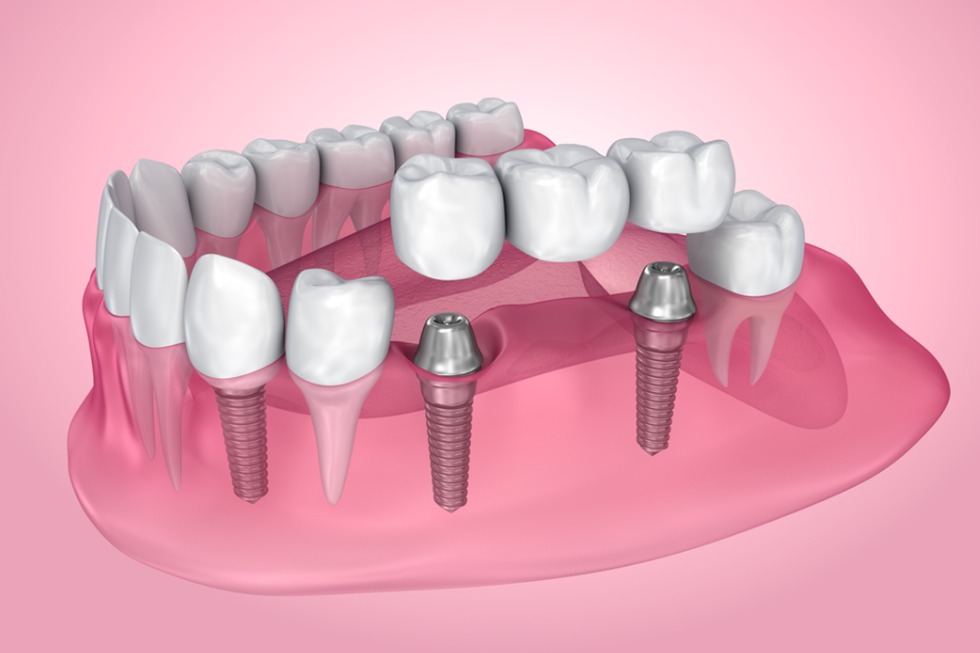
When one or more teeth are missing, a dental bridge can literally bridge the gap. It consists of artificial teeth (called pontics) anchored to adjacent natural teeth or implants, providing both stability and aesthetics.
Bridges are often recommended for:
- Fixing one or more missing teeth in a row
- Preventing neighboring teeth from shifting
- Restoring chewing ability and clear speech
- Maintaining proper bite alignment and facial shape
Key benefits of bridges:
- Restore natural appearance and confidence in your smile
- Prevent jawbone shrinkage caused by missing teeth
- Maintain the structure and alignment of surrounding teeth
- Improve overall oral function and comfort
Dental crowns vs bridges: key differences
Aspect | Dental Crown | Dental Bridge |
Purpose | Protects and strengthens a damaged, decayed, or weakened tooth. Also used to cover a dental implant. | Replaces one or more missing teeth by anchoring artificial teeth to adjacent natural teeth or implants. |
Structure | A single cap that fits over an existing tooth or implant. | A row of multiple units: two crowns on either side supporting one or more false teeth (pontics) in between. |
Support Type | Anchored to an existing tooth or an implant (via abutment after osseointegration). | Supported by natural adjacent teeth (prepared by your dentist) or by dental implants. |
Durability | 10–15 years with proper care and hygiene. | 10–12 years depending on material and maintenance. |
Usually lower, since it involves restoring a single tooth. Cost depends on material (zirconia, porcelain, or metal). | Higher overall, as it replaces multiple teeth and requires more units or implant support. |
Benefits of restorative treatments
Whether you’re restoring a single tooth or multiple ones, both crowns and bridges offer several shared advantages:
- Restore chewing and speaking function: Allowing you to eat and talk comfortably again.
- Enhance aesthetics: Matched to the color, size, and shape of your natural teeth.
- Prevent complications: Such as shifting, misalignment, or jaw strain.
- Improve oral health and confidence: By restoring balance and a natural smile line.
- Long-lasting results: With proper hygiene and professional care, both can last over a decade.
Step-by-step guide to the crown & bridge procedure
The treatment process for crowns and bridges usually involves a few simple steps:
- Consultation and Examination: The dentist assesses your oral health, takes X-rays, and discusses your goals.
- Tooth Preparation: Damaged or supporting teeth are shaped to fit the restoration.
- Impressions and Digital Scans: Used to design a custom-fit crown or bridge that matches your bite and appearance.
- Temporary Restoration: Protects your teeth while the permanent one is fabricated.
- Final Placement: The new crown or bridge is cemented securely, checked for bite comfort, and polished for a natural finish.
Tips for long-lasting dental crowns and bridges
Good oral hygiene is key to preserving your restoration’s longevity. Here’s how to keep it in top condition:
- Use a soft-bristle toothbrush and fluoride toothpaste to clean your teeth twice a day.
- Floss carefully, especially around bridge anchors and under the pontic.
- Try to avoid chewing tough foods, and don’t use your teeth as tools to open packages.
- Schedule regular dental check-ups for professional cleaning and inspection.
Making the right choice: crown or bridge?
Selecting between a dental crown and a bridge isn’t just about preference; it depends on a few key clinical and personal factors.
- Condition of your existing teeth: If your tooth is damaged but still intact, a crown is usually the ideal solution to protect and restore it. If the tooth is already missing, a bridge may be needed to fill the gap.
- Number of missing or weakened teeth: Bridges are best when one or more teeth are missing in a row, while crowns focus on single-tooth repair.
- Health of surrounding teeth and gums: For a bridge to work, neighboring teeth must be strong enough to support it. If not, an implant or single crown may be preferred.
- Durability and long-term goals: Crowns strengthen existing teeth for the long run, whereas bridges restore function and aesthetics but may require more maintenance over time.
- Budget and treatment timeline: Crowns are usually quicker and more affordable per tooth, while bridges cover multiple teeth at once but involve a higher overall cost.
Why choose El-Shenawy Dental Centers for restorative treatments
At El-Shenawy Dental Centers, restorative dentistry combines advanced technology with artistry and precision.All dental crowns and bridges are custom-crafted to blend seamlessly with your natural teeth, ensuring durability and comfort that lasts for years.
Our clinics are equipped with modern imaging systems, digital impression tools, and high-quality materials that guarantee perfect fits and natural aesthetics with minimal chair time. Each restoration is designed to restore full function and enhance the beauty of your smile while maintaining the highest standards of safety and patient care.
Restore the strength and beauty of your smile with advanced care at El-Shenawy Dental Centers. Book your appointment today.
Frequently asked questions
When will I be able to eat after getting a crown or bridge?
It is best to wait until the anesthesia wears off prior to eating. For the first 24 hours, stick to soft foods and avoid biting directly on the treated area to allow the cement to fully set.
Do crowns and bridges stain like natural teeth?
High-quality materials such as zirconia and porcelain are stain-resistant, but good hygiene is still important. Regular cleaning and avoiding excessive coffee, tea, or tobacco help preserve their color.