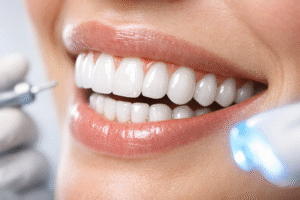
Many people start thinking about teeth whitening methods after noticing they avoid smiling fully in photos or conversations. It’s often a small change in appearance, but one that can affect how confident a smile feels.
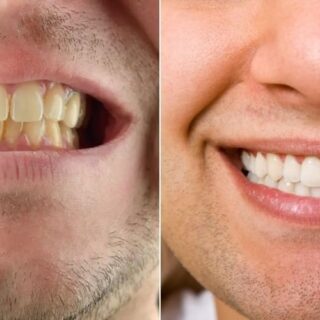
Teeth whitening has become one of the most popular cosmetic dental treatments because it offers a simple, non-invasive solution. Today, patients can choose between professional in-clinic whitening and a wide range of at-home options. While both aim to improve tooth color, the experience and results can vary more than many people expect.
In this blog, we compare between clinic teeth whitening methods using modern technologies Vs home methods, discuss safety and sensitivity, and help you decide which option is the right fit for your smile.
Why Your Teeth Lose Their Natural Whiteness Over Time
Teeth do not suddenly change color. Discoloration usually happens gradually, which is why many people only notice it when comparing photos or looking closely in the mirror. Several everyday factors contribute to this change, even in people who brush and care for their teeth regularly.
The most common reasons include:
- Food and drink stains: Coffee, tea, soft drinks, and certain foods can gradually stain the outer surface of the teeth.
- Smoking and tobacco use: Nicotine and tar cause deep stains that are difficult to remove with brushing alone.
- Natural aging: Thinning enamel makes the darker dentin beneath more visible over time.
- Poor oral hygiene: Inadequate brushing and flossing allow plaque and surface stains to build up.
- Medications and medical factors: Some medications and treatments can alter tooth color, especially during tooth development.
How Teeth Whitening Works and What to Expect
Teeth whitening works by using whitening agents to break down stains on and within the tooth structure. These agents penetrate the enamel and target discoloration without damaging the tooth when used correctly.
Most professional and at-home whitening treatments rely on peroxide-based formulas, though the concentration and application method vary significantly.
What Teeth Whitening Methods Can Fix
Teeth whitening is effective for many common types of discoloration, including:
- Yellowing caused by aging
- Surface stains from food, drinks, and smoking
- Mild to moderate overall discoloration
What Teeth Whitening Cannot Fix
It is important to set realistic expectations. Teeth whitening does not work on:
- Dental restorations such as crowns, veneers, or fillings.
- Severe discoloration caused by trauma or certain medications.
- Very dark internal stains without professional evaluation.
In-Clinic Teeth Whitening: Fast, Professional Results
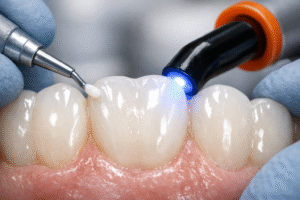
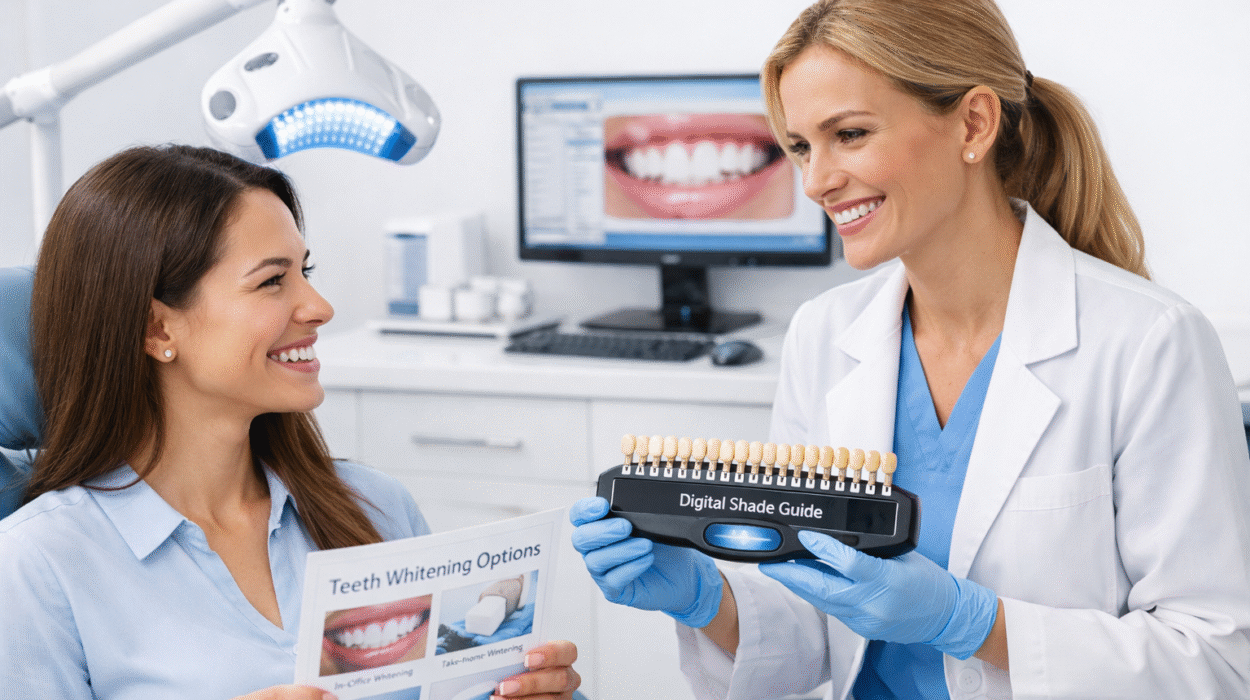
In-clinic teeth whitening is performed under the supervision of a dentist using professional-grade whitening agents. These treatments are designed to deliver noticeable results quickly, often in a single visit, while maintaining a high level of safety and control.
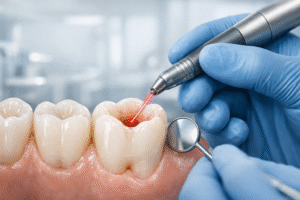
During the procedure, the teeth and gums are protected before the whitening gel is applied. In some cases, a light or activation system is used to enhance results. Because the process is carefully monitored, the risk of uneven whitening or excessive sensitivity is reduced.
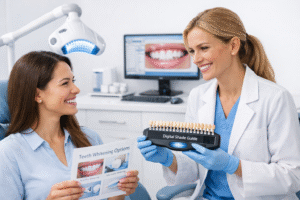
A major advantage of in-clinic whitening is predictability. The dentist evaluates tooth condition, existing restorations, and sensitivity in advance, then adjusts the treatment as needed. This leads to more consistent and longer-lasting results compared to most at-home options.
At-Home Teeth Whitening: Convenience With Compromises
At-home teeth whitening includes products that can be used without visiting a dentist. These options are widely available and appeal to people who prefer flexibility and convenience.
Common At-Home Teeth Whitening Methods
- Whitening strips
- Whitening trays and gels
- Whitening toothpastes and pens
At-home whitening can improve mild discoloration, but results are typically gradual and less predictable than professional treatments. The lower-strength whitening agents reduce risk but also limit how much the tooth color can change.
Sensitivity and uneven results are also common concerns without professional supervision, especially when products are overused or applied incorrectly. For this reason, at-home whitening is best suited for maintenance or minor improvements rather than significant whitening.
In-Clinic vs At-Home Whitening: Pros and Cons
-
In-Clinic Teeth Whitening
Advantages:
- Immediate, visible whitening results.
- Dentist supervision allows for stronger whitening agents to be used safely.
- More even and predictable outcomes.
- Treatment can be adjusted based on tooth condition and sensitivity.
Disadvantages:
- Higher upfront cost compared to at-home options.
- Requires a clinic visit and scheduled appointment.
-
At-Home Teeth Whitening
Advantages:
- Convenient and easy to use on your own schedule.
- Lower initial cost.
- Useful for maintaining results after professional whitening.
Disadvantages:
- Slower and less predictable results.
- Limited whitening strength.
- Higher risk of sensitivity or uneven whitening if misused.
- Not suitable for significant discoloration.
Is Teeth Whitening Safe for Teeth and Gums?
When done correctly, teeth whitening is considered a safe cosmetic dental treatment. Safety depends on the strength of the whitening agents, proper application, and whether the process is professionally supervised.
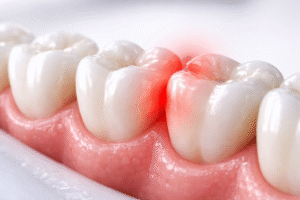
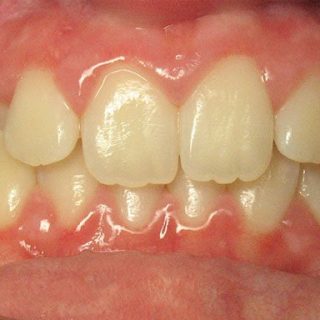
Temporary tooth sensitivity is the most common side effect and usually resolves on its own shortly after treatment. Gum irritation may also occur if whitening products contact the soft tissues, a risk that is lower during in-clinic whitening due to protective measures.
A dental evaluation before whitening is important. Issues such as cavities, gum disease, or existing restorations can affect both safety and results. Professional assessment helps ensure whitening is appropriate and prevents unnecessary complications.
How to Choose the Best Teeth Whitening Option for Your Smile
You may be a good candidate for in-clinic teeth whitening if you:
- Want fast, noticeable results
- Have moderate to severe discoloration
- Prefer dentist supervision for safety and comfort
- Are preparing for a special event or occasion
At-home whitening may be more suitable if you:
- Have mild discoloration
- Prefer a lower upfront cost
- Want to maintain results after professional whitening
- Are comfortable with gradual improvement
If you are unsure which option is right for you, a professional dental assessment can help identify the safest and most effective approach for your smile.
El-Shenawy Dental Centers: Teeth Whitening Tailored to Your Smile
At El-Shenawy Dental Centers, teeth whitening is not treated as a one-size-fits-all procedure. Every smile is different, and achieving safe, natural-looking results starts with proper assessment and personalized care.
Before recommending any whitening treatment, our dental team evaluates tooth condition, existing restorations, and sensitivity levels. This allows the whitening approach to be adjusted to each patient’s needs, ensuring effective results without unnecessary discomfort or risk.
By combining professional expertise with carefully selected whitening techniques, we deliver predictable outcomes that look natural and last longer.
Ready for a Whiter Smile? Book Your Consultation Today!
Frequently Asked Questions
- How Long Do Teeth Whitening Results Actually Last?
Teeth whitening results typically last between 6 months and 2 years, depending on oral care habits and lifestyle factors. Professional whitening typically lasts longer than at-home methods.
- Is Teeth Whitening Safe During Pregnancy?
Teeth whitening is usually postponed during pregnancy as a precaution. Dentists generally recommend waiting until after pregnancy for cosmetic treatments.
- Is Teeth Whitening Suitable for Everyone?
No, teeth whitening is safe for many people, but not for everyone. A dental evaluation is recommended, especially for those with denta issues or sensitivity.