Orthodontic concerns are widespread in Egypt and throughout the region. Clinical surveys have found that close to 70 % of young people show some form of dental misalignment that may benefit from corrective treatment. Across school-aged populations, about 20 % have a definite need for orthodontic care based on clinical indices.
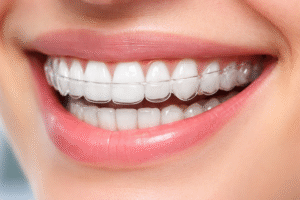
These prevalence figures underscore the demand for modern, patient-friendly solutions like clear aligners; nearly invisible trays that offer an alternative to traditional braces.
In this blog, we’ll look at the main treatment approaches, explain the advantages patients experience, and break down what you need to know about duration and cost before choosing this option.
How the treatment works from start to finish
Clear aligner treatment follows a structured process that combines clinical planning with patient commitment.
- Assessment and Planning: Treatment starts with a clinical evaluation and digital scans to design a complete tooth-movement plan.
- Aligner Production: A set of custom aligners is created, with each aligner worn in sequence to gradually guide teeth into their planned positions.
- Daily Wear: Each aligner is worn for about one week, 20–22 hours per day, and removed only for eating and oral hygiene.
- Progress and Monitoring: Teeth shift progressively as aligners change, with periodic check-ups to track results.
- Completion and Retention: After treatment ends, retainers help maintain the final alignment.
Types of aligner-based treatment approaches
Clear aligner treatment can be categorized based on the level of clinical supervision involved. Understanding this distinction helps patients set realistic expectations regarding outcomes, safety, and follow-up care.
In-Clinic, Doctor-Supervised Aligner Treatment
This approach is fully managed by a dentist or orthodontist in a clinical setting. Treatment begins with a comprehensive examination and digital planning, followed by regular in-clinic reviews to monitor progress and make adjustments when needed. It is suitable for a wide range of cases and offers the highest level of control and predictability.
At-Home or Limited-Supervision
This involves minimal in-person supervision and is typically designed for very minor alignment concerns. While they may appear convenient, the lack of regular clinical monitoring limits their suitability and may increase the risk of incomplete or suboptimal results.
Dental cases that can be treated with transparent aligners
Transparent aligners are effective for a range of mild to moderate orthodontic cases, where controlled, gradual tooth movement is sufficient. Case selection is critical to achieving predictable results.
They are commonly used to treat:
- Mild to moderate crowding, where teeth overlap or lack space
- Spacing issues, including gaps between teeth
- Minor bite problems, such as mild overbite, underbite, or crossbite
- Relapse after previous braces, where teeth have shifted back over time
Transparent aligners may not be suitable for severe bite discrepancies or complex skeletal cases, which often require fixed orthodontic solutions. A professional evaluation is essential to determine suitability and select the most effective treatment approach.
Everyday advantages of removable aligners
Clear aligners are designed to fit into everyday routines with minimal disruption, which is why they are often preferred by adult patients.
Key benefits include:
- Discreet appearance, making them barely noticeable in social and professional settings
- Removability, allowing patients to eat normally and maintain regular oral hygiene
- Improved comfort, as smooth aligner surfaces reduce irritation to gums and cheeks
- Fewer lifestyle restrictions, compared to fixed orthodontic appliances
- Easier hygiene routines, lowering the risk of plaque buildup during treatment
Clear aligners vs other orthodontic options
Compared to traditional metal braces, aligner-based treatment offers greater flexibility and discretion. While metal braces are fixed and effective for complex cases, aligners are removable and typically better suited for patients seeking a less noticeable option with fewer daily restrictions.
When compared to fixed transparent braces, aligners provide similar aesthetic advantages but differ in use. Fixed transparent braces remain attached throughout treatment and rely on periodic adjustments, whereas aligners are worn in stages and removed for eating and oral hygiene. The most suitable option depends on case complexity, lifestyle, and professional recommendation.
Clear aligner treatment cost in Egypt
The cost of clear aligner treatment in Egypt varies depending on several factors, including case complexity, treatment duration, and whether one or both jaws are treated. Additional considerations such as follow-up frequency and the need for refinements can also influence the final cost.
At El-Shenawy Dental Centers, clear aligner treatment starts from:
- EGP 44,200 for one jaw
- EGP 55,300 for both jaws
Final pricing is determined after a clinical assessment to ensure the treatment plan matches the patient’s orthodontic needs and expected outcomes.
Who is a suitable candidate for this treatment?
Beyond dental alignment issues, clear aligner treatment requires a certain level of commitment and suitability from the patient.
Ideal candidates are typically:
- Adults and older teenagers with the ability to follow daily wear instructions
- Individuals seeking a removable option that fits professional or social lifestyles
- Patients with realistic expectations about treatment duration and results
Clear aligner treatment at El-Shenawy Dental Centers
Clear aligner treatment at El-Shenawy Dental Centers is delivered by experienced dentists with specialized training in orthodontic diagnosis and aligner-based planning. Each case begins with a thorough clinical assessment and detailed digital planning to ensure tooth movement is accurate, safe, and appropriate for the patient’s condition.
Treatment is monitored through regular follow-up visits, allowing adjustments when required and ensuring progress remains aligned with the original plan. This structured, doctor-supervised approach helps achieve predictable outcomes while prioritizing oral health, comfort, and long-term stability.
Frequently Asked Questions
-
Do clear aligners cause pain?
Clear aligners may cause mild pressure or discomfort during the first days of wearing a new set. This is normal and usually subsides quickly as the teeth begin to adapt.
-
Can I eat and drink normally during treatment?
Yes. Aligners are removed during meals, allowing patients to eat and drink as usual. They should be taken out for anything other than water.
-
Are the results permanent?
Results can be long-lasting when retainers are worn as prescribed after treatment. Skipping retention may allow teeth to shift over time.