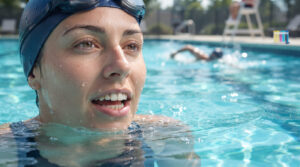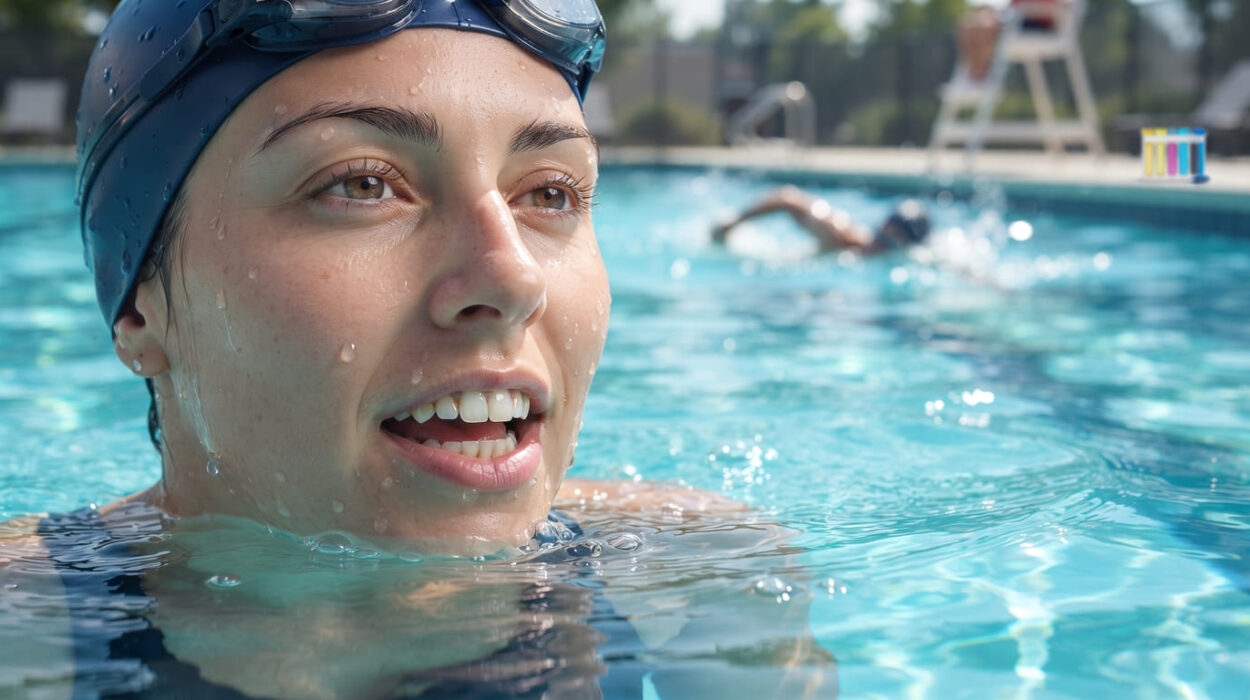
Yes, swimming pool water can affect your teeth — but not equally for everyone. The risk depends almost entirely on how many hours per week you spend in chlorinated water and how well-maintained the pool’s chemical balance is. Casual swimmers who visit the pool a few times a month have virtually no risk. Competitive swimmers training 6+ hours weekly are the ones who may develop real enamel damage and the characteristic brown stains known as swimmer’s calculus.
How Pool Water Harms Your Teeth
Enamel Erosion
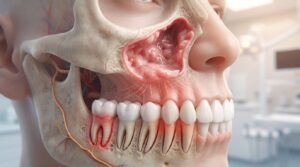
Pool water with a pH below 7.2 is acidic enough to gradually dissolve the mineral structure of tooth enamel. Over time, this makes teeth thinner, more translucent at the edges, and increasingly vulnerable to cavities. The process is identical to acid-driven enamel erosion from other sources — but with chlorinated water, the exposure is prolonged and repetitive.
Swimmer’s Calculus
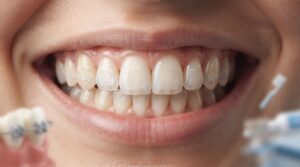
A distinctive yellow-brown deposit that forms on the front teeth of regular swimmers. It’s caused by salivary proteins reacting with the chemical compounds in chlorinated water, producing hard calcified deposits that can’t be removed by brushing. Unlike regular tartar (which forms from plaque), swimmer’s calculus forms regardless of how well you brush — the trigger is the pool chemistry itself. Removal requires professional cleaning in a dental office.
Tooth Sensitivity
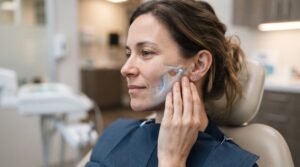
As enamel thins from repeated acid exposure, the dentin layer underneath becomes exposed. Dentin contains microscopic channels connected to the nerve, which is why you start feeling sharp pain with hot, cold, or sweet foods. If you’ve noticed new sensitivity after starting a swimming routine, it may be an early sign of erosion — see tooth sensitivity treatment options for what can be done.
Staining
Imbalanced pool chemicals alter the proteins on your tooth surfaces, making them pick up stains from food and drinks more easily. This is separate from swimmer’s calculus — it’s a surface discoloration that professional cleaning or whitening can address.
Who’s Most at Risk?
| Swimmer Profile | Risk Level | Why |
|---|---|---|
| Competitive/regular swimmer (6+ hours/week) | High | Prolonged, repeated exposure to acidic pool water — swimmer’s calculus is likely |
| Child swimming daily in summer | Medium to High | Primary and newly erupted permanent teeth have thinner, less mineralized enamel |
| Recreational swimmer (1–2x/week) | Low | Exposure is usually insufficient to cause noticeable erosion |
| Occasional hotel/resort pool visitor | Negligible | Transient exposure does not typically cause problems |
How to Protect Your Teeth: Before, During, and After Swimming
Before You Swim
- Brush with fluoride toothpaste — the fluoride layer provides temporary extra protection for your enamel.
- Keep your mouth closed as much as possible — obvious but effective. Water that doesn’t enter your mouth can’t affect your teeth.
During Your Swim
- Avoid holding water in your mouth or swimming with your mouth open for extended periods.
- Pay attention to strong chlorine smell — a harsh chemical odor doesn’t mean the pool is clean. It often indicates chloramines (chlorine reacting with organic matter), which suggests poor chemical balance.
After You Get Out
- Rinse your mouth with fresh tap water immediately — this removes residual acidic pool water before it sits on your enamel.
- Don’t brush your teeth right away. Wait at least 30 minutes. The same rule that applies after any acid exposure: enamel is temporarily softened, and brushing during this window scrubs it away instead of cleaning it.
- Use a fluoride mouthwash after the waiting period to help remineralize enamel.
- Drink plenty of plain water to rehydrate your mouth and neutralize residual acidity.
Does Chlorine Affect Dental Work?
Composite fillings, crowns, and veneers don’t erode the same way natural enamel does. However, the natural tooth structure surrounding dental work (the enamel margins around a filling or crown edge) can still be affected by acidic pool water with repeated exposure. Braces don’t react to chlorine directly, but the brackets create additional angles that can trap pool water and increase contact time with enamel — making post-swim rinsing even more important for orthodontic patients.
Pool vs. Ocean: Which Is Better for Your Teeth?
Ocean water is slightly alkaline (pH ~8), which means it doesn’t erode enamel. The salt in seawater may even have mild antibacterial properties (same principle as a saltwater rinse). From a dental perspective specifically, swimming in the ocean carries no enamel erosion risk — unlike chlorinated pools.
Signs You Should See a Dentist
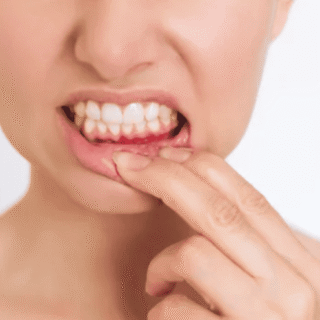
- Brown or yellow deposits on your front teeth that don’t come off with brushing.
- Front tooth edges that appear translucent or thinner than before.
- New sensitivity to hot, cold, or sweet that started after regular swimming.
- Discoloration or texture changes on existing fillings or restorations. If staining has become a cosmetic concern, explore professional teeth whitening options to restore your smile.
FAQ
Does chlorine in tap water affect teeth?
No. Chlorine concentrations in drinking water are far too low to cause any dental damage. The concern is specific to swimming pools and hot tubs where chlorine levels are much higher.
How many hours of swimming per week is risky for teeth?
There’s no exact threshold, but research suggests swimmers who spend more than 6 hours per week in chlorinated pools are significantly more likely to develop swimmer’s calculus and enamel erosion.
What is swimmer’s calculus?
Hard, yellow-brown mineral deposits that form on the front teeth of regular swimmers. They’re caused by salivary proteins reacting with pool chemicals — not by poor brushing. They can only be removed by professional dental cleaning.
Why shouldn’t I brush my teeth immediately after swimming?
Pool water is acidic, which temporarily softens your enamel. Brushing during this window (roughly 30 minutes) can scrub away the softened enamel layer. Rinse with plain water first, then wait before brushing.
Is swimming in the ocean better for teeth than the pool?
From a dental perspective, yes. Ocean water is alkaline (pH ~8) and doesn’t erode enamel. However, this doesn’t mean it actively protects your teeth — it simply doesn’t harm them.
Are children’s teeth more vulnerable to pool chlorine?
Yes. Baby teeth and newly erupted permanent teeth have thinner, less mineralized enamel, making them more susceptible to acid erosion from pool water.