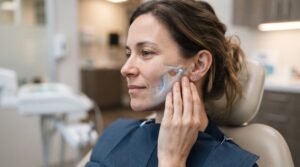
Have you ever woken up with your jaw feeling so tight that opening your mouth is difficult, or noticed a click when you chew, yawn, or talk? Jaw pain and clicking can make everyday activities like eating, speaking, and relaxing surprisingly uncomfortable. These symptoms can be associated with temporomandibular joint (TMJ) disorders, but not every clicking jaw means there is a serious problem.
Understanding why your jaw clicks, which symptoms may need attention, and what you can do to ease discomfort can help you decide when it’s time to seek professional care.
This guide explains the common causes of jaw clicking, how to recognize potential warning signs, and the treatment options available when symptoms persist.
What Is the Temporomandibular Joint, and Why Does It Click?
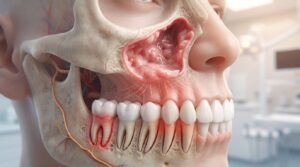
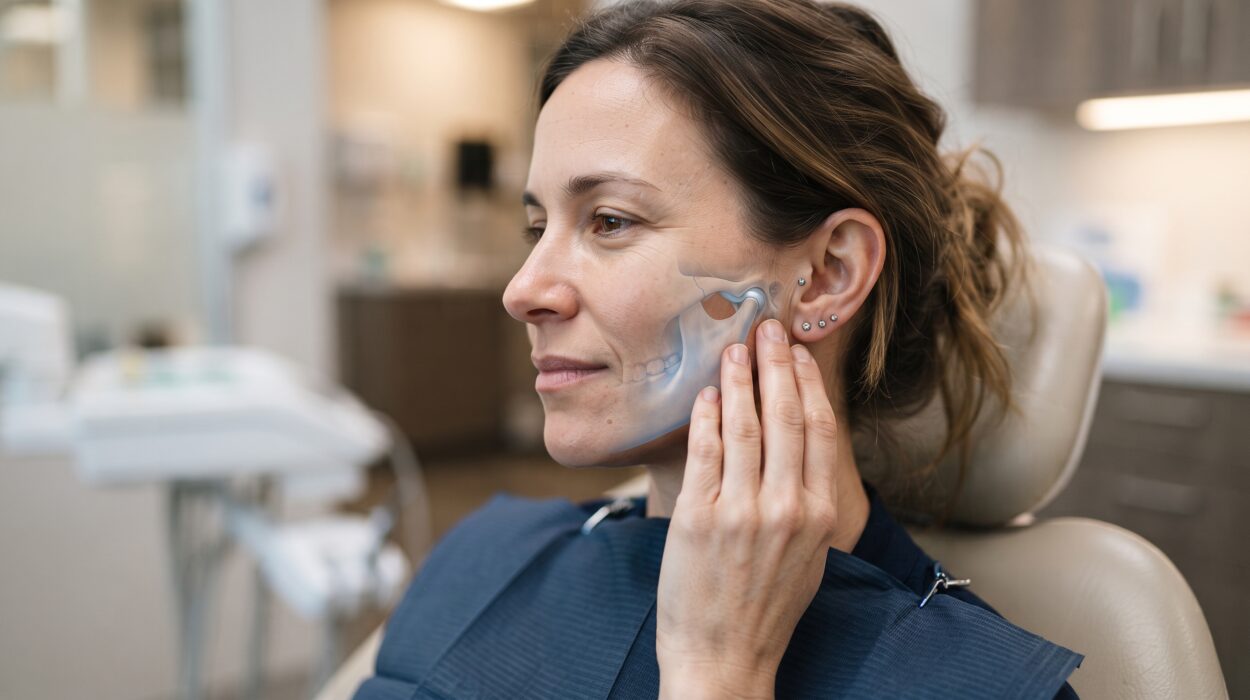
You have two temporomandibular joints, one just in front of each ear, connecting your lower jaw to your skull. Each joint works more like a sliding hinge than a simple door hinge, allowing your jaw to both rotate and glide forward as you open and close your mouth. Inside each joint is a small, shock absorbing disc of cartilage that helps the jaw move smoothly.
A clicking or popping sound often occurs when this disc moves slightly out of its normal position and then returns as the jaw opens or closes. This is known as disc displacement with reduction and is one of the common causes of jaw clicking. Because the temporomandibular joint is involved in almost every jaw movement, even a small change in how the disc moves can produce an audible click, sometimes without any pain or other symptoms.
Is Jaw Clicking Always TMJ Disorder?
Not necessarily. Clicking that happens only when you open very wide is usually just the joint being pushed slightly past its comfortable range and is rarely a cause for concern. Clicking that happens during ordinary chewing or talking, especially without any pain, is extremely common and often doesn’t need treatment either, it only becomes “TMJ disorder” in a clinical sense when it’s accompanied by pain, tenderness, stiffness, or a limited range of motion.
Use this table as a quick, practical way to gauge where your own symptoms fall:
What Causes TMJ Disorder and Jaw Clicking?
A clicking jaw rarely has a single cause. It’s usually a mix of factors that add pressure to the joint over time:
Bruxism (teeth grinding or clenching): sustained, often unconscious pressure on the joint, especially overnight, is one of the most common drivers of TMJ symptoms.
A misaligned bite (malocclusion): when your upper and lower teeth don’t meet evenly, the jaw has to shift to compensate every time you bite down, which places uneven strain on the joint over months or years.
Everyday habits: chewing gum for long stretches, biting your nails or pens, resting your chin on your hand, and cradling a phone between your shoulder and jaw all add repetitive strain.
Stress and anxiety: muscle tension around the jaw and face is a well-documented response to stress, and it often shows up as clenching you’re not even aware of.
Arthritis: osteoarthritis or rheumatoid arthritis can damage the cartilage inside the joint.
Trauma or injury: a blow to the jaw, whiplash, or a sports injury can displace the disc or damage the joint directly.
Genetics and other conditions: a family history of TMJ problems, along with conditions such as fibromyalgia or ongoing sleep disturbances, can raise your risk.
Symptoms That Often Come With a Clicking Jaw
TMJ disorder rarely shows up as clicking alone. Other symptoms that commonly appear alongside it include:
Pain or tenderness in the jaw joint itself
Aching pain in and around the ear
Headaches, especially near the temples
Neck pain or a stiff neck
Difficulty or pain when chewing
A feeling of the jaw locking or catching
Tooth pain that shows up together with jaw tenderness
How TMJ Disorder Is Diagnosed
Most of the time, a dentist can diagnose TMJ disorder simply by asking about your symptoms, watching and feeling how your jaw moves, and checking whether your bite lines up correctly. They’ll typically ask you to open, close, and move your jaw side to side while they listen for clicking and check your range of motion.
Imaging such as an X-ray, CT scan, or MRI isn’t usually needed for mild cases, and is generally reserved for situations where a dentist suspects joint damage, significant disc displacement, or another underlying condition that needs to be seen in detail.
How to Ease Jaw Clicking and TMJ Discomfort at Home
Most mild-to-moderate TMJ symptoms respond well to simple, conservative care in the first one to two weeks:
Cold, then heat: use a cold compress for the first 24 to 48 hours to calm acute soreness, then switch to a warm compress to relax tight jaw muscles.
A temporarily softer diet: yogurt, eggs, soups, pasta, and other foods that need minimal chewing take pressure off a sore joint while it settles.
Over-the-counter pain relief: NSAIDs such as ibuprofen can reduce both pain and inflammation when taken as directed for a short period.
Keep your jaw relaxed: Let your upper and lower teeth rest slightly apart, keep your lips gently together, and place your tongue comfortably against the roof of your mouth. Try to avoid clenching or pressing your teeth together during the day.
Gentle jaw stretches: specific exercises can help restore smoother movement once acute soreness has eased.
Stress management: since muscle tension often drives clenching, anything that lowers overall stress indirectly helps the jaw too.
Jaw Exercises That Can Help Reduce Clicking and Tension
Gentle, controlled jaw exercises can improve how smoothly the joint moves and ease muscle tension around it. Try these once acute soreness has settled, stopping any exercise that increases pain:
The Goldfish Exercise
Begin with your tongue resting lightly against the roof of your mouth. Use one finger to monitor the area just in front of your ear, where the jaw joint is located, and place another finger on your chin. Keeping the movement comfortable, slowly open your mouth to roughly halfway and then return to the closed position. Perform 6 repetitions, up to 6 times throughout the day.
Chin Tucks
Sit or stand up straight, then gently pull your chin straight back, as if making a double chin, without tilting your head down. Hold for 3 seconds and repeat 10 times. This improves neck and jaw posture, which are closely linked.
Controlled Side-to-Side and Forward Movement
Start with your jaw in a comfortable, relaxed position. Make a few gentle movements by guiding the lower jaw from left to right, then from front to back. Keep each movement within a comfortable range and avoid stretching or forcing the jaw.
Note: These exercises support recovery from mild symptoms, but they aren’t a substitute for a professional evaluation if clicking is accompanied by significant pain, locking, or symptoms that persist beyond a couple of weeks.
Habits to Avoid If Your Jaw Clicks
Certain everyday habits keep adding pressure to an already irritated joint. While your jaw is sore, or if clicking has become a regular issue, try to limit:
Chewing gum for extended periods
Biting your nails, pens, or other hard objects
Chewing ice or very hard, crunchy foods
Taking large bites of tough or chewy foods
Resting your chin on your hand for long stretches
Cradling a phone between your shoulder and jaw
Yawning without supporting your jaw with your hand
Clenching your teeth while concentrating, exercising, or under stress
The Connection Between Nighttime Grinding and TMJ Clicking
A large share of jaw clicking traces back to grinding or clenching that happens overnight, often without the person ever realizing it. Because it occurs during sleep, nighttime bruxism tends to go unnoticed until the jaw is already sore. Common signs include waking up with a tight or aching jaw, a dull headache first thing in the morning, flattened or worn edges on your teeth, or a partner mentioning they’ve heard grinding sounds while you sleep.
If this sounds familiar, our detailed guide on stress and teeth grinding covers why bruxism happens and how to recognize it early.
The most effective way to protect the joint from nighttime grinding is a custom-fitted night guard, which cushions the bite and prevents the sustained clenching that aggravates the joint. Our guide to night mouth guards walks through how they work and what to expect from getting fitted for one.
Professional and Medical Treatment Options
If home care doesn’t fully resolve your symptoms within a couple of weeks, or if your case is more moderate to begin with, a dentist or TMJ specialist has several additional options:
Custom oral splints or mouth guards: fitted by a dentist, these cushion the bite and reduce the joint pressure caused by clenching or grinding, particularly overnight.
Medication: short courses of muscle relaxants can ease tight jaw muscles, and in cases where chronic pain and stress are closely linked, a low dose of certain antidepressants is sometimes prescribed to help.
Physical therapy: a physical therapist can use hands-on techniques, targeted exercises, and trigger point massage to loosen tight muscles around the jaw.
TENS therapy: transcutaneous electrical nerve stimulation delivers small electrical impulses to the jaw muscles and can provide temporary relief for some patients.
Orthodontic or restorative correction: when a misaligned bite is contributing to your symptoms, orthodontic treatment with braces or aligners, or restorative treatment with crowns or bridges, may help address the underlying bite problem. If crooked or misaligned teeth are part of the issue, our guide to braces for crooked teeth explains how orthodontic treatment can improve tooth alignment.
Surgical treatments: reserved for a small number of cases where conservative treatment hasn’t worked over several months. Options range from arthrocentesis, a minimally invasive procedure to drain excess joint fluid, to arthroscopy or, rarely, open joint surgery.
When to See a Dentist or TMJ Specialist
Most jaw clicking is manageable with time and conservative care, but you should book an appointment if you notice any of the following:
Your jaw locks open or shut and won’t release on its own
Pain is severe, or doesn’t improve after 1 to 2 weeks of home care
Clicking is accompanied by swelling, fever, or visible asymmetry in your face
You suddenly can’t open or close your mouth fully
Clicking or pain began right after a blow to the jaw or another injury
Pain persistently radiates to your ear, temple, or neck
If your jaw ever locks or feels like it has popped out of place, don’t try to force it back yourself, see a dentist or seek medical care right away.
Will Jaw Clicking Go Away on Its Own?
For a lot of people, yes. Mild clicking without pain can persist harmlessly for years and never needs treatment. When clicking does come with pain or stiffness, it typically improves within a few weeks to a few months with conservative care such as the home remedies and lifestyle changes above. Surgery is rarely necessary and is only considered after other treatments haven’t helped.
If your symptoms are ongoing, worsening, or affecting your ability to eat and speak comfortably, it’s worth getting evaluated rather than waiting it out indefinitely.
Expert TMJ Care at El Shenawy Dental Clinics
At El Shenawy Dental Clinics, we take a thorough and individualized approach to patients experiencing jaw clicking, discomfort, or other TMJ symptoms. Our dental team carefully evaluates your symptoms, jaw movement, and bite to identify factors that may be contributing to the problem.
Based on your individual condition, we recommend an appropriate treatment approach and provide clear guidance throughout your care.
Experiencing jaw clicking or discomfort? Book your consultation at El Shenawy Dental Clinics today.
Frequently Asked Questions
Can TMJ disorder affect the way your teeth fit together?
Yes. Changes in jaw movement or joint position can sometimes affect how your upper and lower teeth come together. If you notice a new change in your bite along with jaw pain, stiffness, or clicking, a dental evaluation can help determine the cause.
Can jaw clicking come back after treatment?
It can. Clicking may return if the factors contributing to it, such as clenching, grinding, or repeated strain on the jaw, continue after treatment.