A knocked-out tooth is alarming, especially when it happens to a child. The first 30 minutes can make a crucial difference in whether the tooth can be saved. Acting quickly, handling the tooth correctly, and getting urgent dental care can improve the chances of successful reimplantation. Knowing the right steps to take can help you stay calm and protect the tooth until you reach a dentist.
The sections below explain what to do immediately after a tooth is knocked out, how to handle the situation when it happens to a child, and what to expect at the dentist.
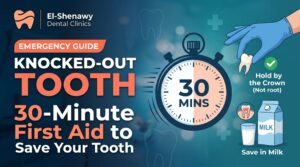
Why the First 30 Minutes Matter So Much
The root of a tooth is covered by a thin layer of living cells, called the periodontal ligament, that allows it to reattach to the bone. Once the tooth is out of the mouth, those cells start dying, and they die fastest when the root dries out. Every step in this guide has one goal: protect the root and keep it moist until a dentist takes over.
| Time Since the Tooth Came Out | If the Tooth Is Kept Moist | If the Tooth Is Left Dry |
| Within 15 minutes | Best chance of saving it, especially if it’s put back in the socket | Root cells are still mostly alive, but they start drying within minutes |
| 15–30 minutes | Root cells can still be alive | Root cells are dying quickly |
| After 30 minutes | The tooth can still often be saved if total dry time stays under 60 minutes | Most root cells are no longer alive |
| After 60 minutes | The outlook depends on how long it was dry before it was stored | Root cells are likely dead; a dentist may still put it back, but it is less likely to heal normally |
First Steps After a Tooth Gets Knocked Out
- Check the Person First
If there are signs of a serious head or face injury, go to the emergency department first and bring the tooth in milk.
Pick the Tooth Up by the Crown
Hold the tooth by the crown, the part normally visible above the gum, and avoid touching the root.
Rinse Only If It’s Dirty
Rinse for no more than a few seconds in milk, saline, or cool running water, then stop. Don’t scrub it, and don’t use soap, alcohol, or any disinfectant.
- Put It Back in the Socket (Adult Teeth Only)
- Hold the tooth by the crown, front side facing forward to match the neighboring teeth.
- Push it gently into the socket with light, steady pressure.
- Have the person bite on a clean cloth or gauze to hold it in place, then head to the dentist, even if it feels secure.
Don’t force it. If it won’t go in, the person is too young or too distressed to cooperate, or you suspect a jaw fracture, store the tooth instead.
- If You Can’t Put It Back, Store It Correctly
| Storage Option | How Good Is It? | Why |
| Tooth preservation kit | Excellent | Designed to keep root cells alive for hours; worth keeping in a sports bag or first-aid kit |
| Cold milk | Very good | Its salts and nutrients are close to body fluids and keep cells alive for a few hours |
| Saline (contact lens or wound saline) | Good | Right salt balance, but no nutrients, so best for short periods |
| Inside the cheek (own saliva) | Acceptable | Keeps the tooth moist; only for older children and adults who won’t swallow it |
| Plain tap water | Poor | Wrong salt balance makes root cells swell and burst within minutes |
| Dry (tissue, napkin, pocket) | Worst | Root cells start dying within minutes of drying out |
If water is your only option, use it briefly rather than letting the tooth dry out.
- Control Bleeding and Pain
Press folded gauze or a clean cloth firmly on the socket for 10 to 15 minutes. A cold compress on the cheek reduces swelling. Paracetamol is a safer pain reliever on the way to the dentist than aspirin, which can increase bleeding.
- Call the Dentist on the Way
Tell the clinic when the injury happened, whether it’s a baby or adult tooth, and whether it was replanted or how it’s being stored, so they’re ready when you arrive.
Baby Tooth or Permanent Tooth? Why It Changes Everything
Never put a baby tooth back in. Putting it back in its socket can damage the permanent tooth developing beneath it. Control the bleeding, keep the child calm, and see a dentist the same day to check the gums and the adult tooth below.
Always try to save a permanent tooth, including in children. Between ages 6 and 12, children have a mix of baby and permanent teeth, and the upper front teeth, the ones most often knocked out, are usually permanent by age 7 or 8.
How to tell the difference:
- Age: a front tooth lost before age 6 is almost certainly a baby tooth; after 8, it’s very likely permanent.
- Root length: permanent teeth have long roots, while a baby tooth near its natural time to fall out has a very short root or almost none.
- Size and shape: permanent front teeth are noticeably larger, often with slightly ridged edges.
If you’re not sure, don’t replant it. Keep the tooth in milk until you reach the dentist. Children have one advantage: in a permanent tooth whose root is still developing, the blood supply can sometimes heal after replantation, which rarely happens in adults. Our pediatric dentistry team regularly handles dental injuries in children of all ages.
When to Seek Emergency Medical Care First
Seek emergency medical care before dental treatment if you notice any of the following symptoms. If possible, keep the knocked-out tooth in milk while arranging care, but don’t delay getting medical help.
- Loss of consciousness, even briefly, or confusion afterward
- Repeated vomiting, severe headache, or drowsiness
- Bleeding that won’t slow after 15 minutes of firm pressure
- A jaw that won’t close properly or is very painful to move (possible fracture)
- Difficulty breathing or swallowing
- Deep cuts on the face or lips that may need stitches
Once those are treated, the dental injury still needs a dentist as soon as possible.
What Happens at the Dentist
- Examination and X-ray of the socket, surrounding bone, and neighboring teeth.
- Cleaning and replanting. The dentist checks the position of a tooth you replanted, or gently cleans the socket and places the tooth back.
- Splinting. The tooth is bonded to its neighbors with a thin, flexible wire for about two weeks while it reattaches.
- Antibiotics and a tetanus check, especially if the tooth touched soil.
- Root canal treatment. In adults, the nerve of a replanted tooth rarely recovers, so a root canal usually starts within 7 to 10 days to prevent infection and root damage. For children whose permanent teeth are still developing, the dentist may recommend monitoring the tooth rather than starting root canal treatment immediately.
- Follow-up X-rays over the following months confirm the tooth is healing and the root isn’t being reabsorbed.
Recovery: Caring for a Replanted Tooth
- Stick to soft foods for one to two weeks and avoid biting or chewing with the injured tooth.
- Brush gently with a soft toothbrush, and avoid contact sports until your dentist confirms the tooth is stable.
- Report increasing pain, swelling, a pimple on the gum, or darkening of the tooth promptly.
- If the injury happened during sports, ask your dentist about a custom-fitted mouthguard before returning to play.
Emergency Dental Care at Elshenawy Dental Clinics
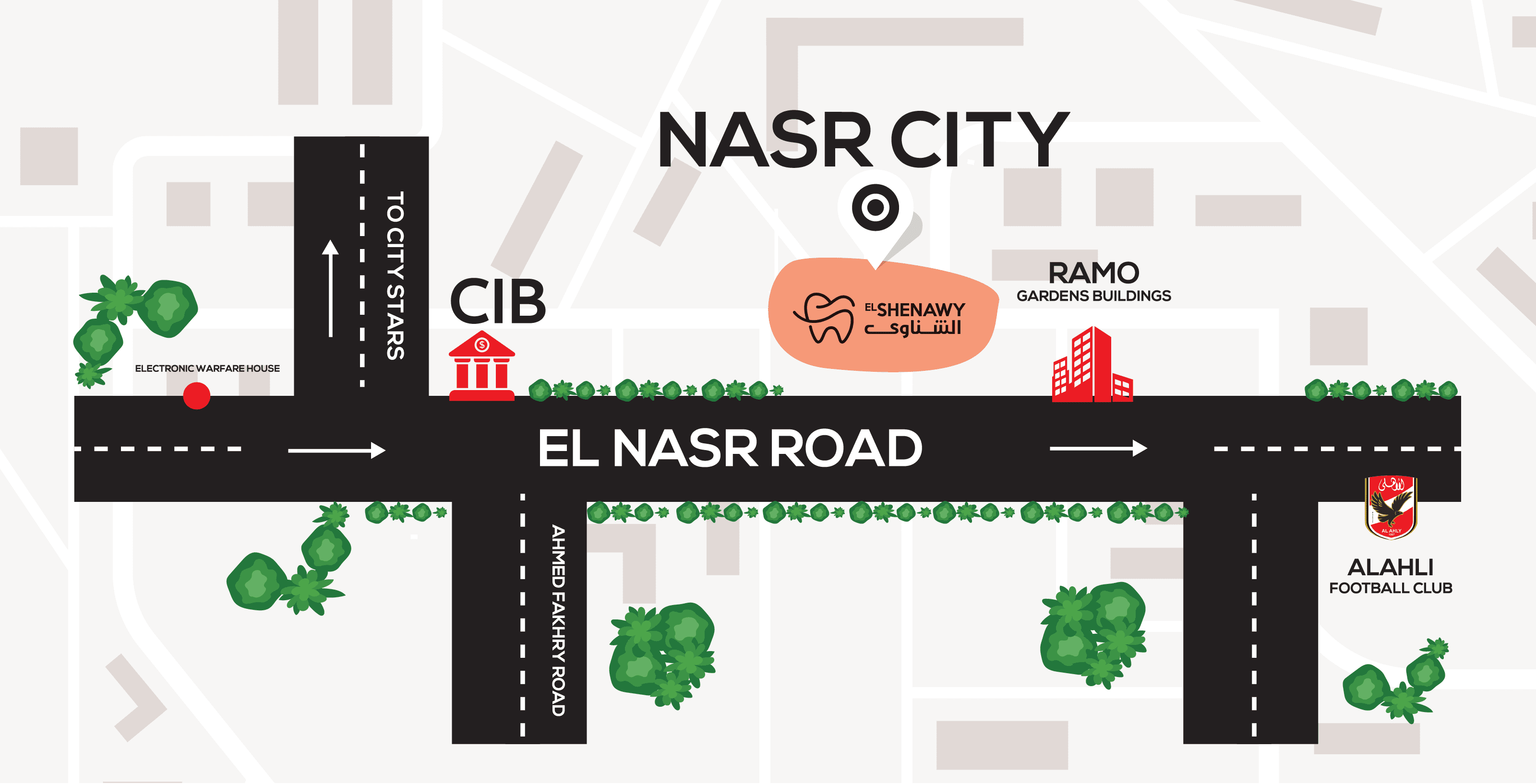
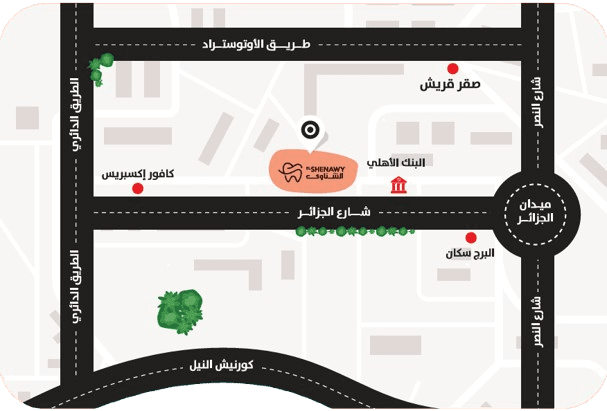
When a tooth gets knocked out, acting quickly and getting professional dental attention are essential. At Elshenawy Dental Clinics, our team understands the urgency of dental injuries and helps patients take the right next steps. With branches across Cairo and Giza, we make it easier to access dental care when you need it most.
If you or your child has a knocked-out tooth, call 19348 promptly to arrange an urgent visit to your nearest branch.
Frequently Asked Questions
What if the tooth is only partially broken?
A chipped or broken tooth is a different injury, but it’s still urgent. Find the broken piece, keep it in milk or water, and see a dentist the same day. The fragment can sometimes be bonded back in place.
Will a replanted tooth look and feel normal?
Often, yes. With proper care, a replanted tooth can remain in place for years.
What if I can’t find my knocked-out tooth?
It may have been swallowed or inhaled. A swallowed tooth usually passes harmlessly, but coughing or trouble breathing needs urgent medical care. Either way, see a dentist to check the socket and nearby teeth.
Can a knocked-out tooth always be saved?
Not always. If it can’t be saved, a single-tooth dental implant is usually the most natural, long-lasting replacement. Children and teens get a temporary solution until their jaw stops growing.