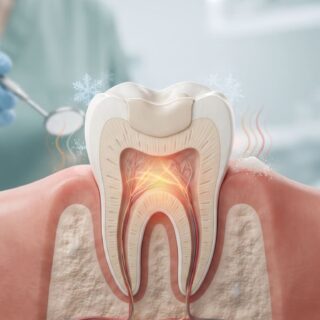
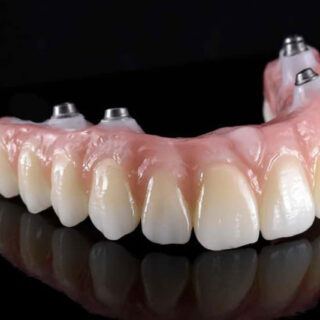
The dental implant procedure replaces a missing tooth root with a titanium post surgically placed into the jawbone, followed by a healing period where bone fuses around the post, and finally an artificial tooth (crown) is attached on top. The entire process takes 3 to 6 months from start to finish for a standard single-tooth implant, though it can be longer if bone grafting is needed first.
Step-by-Step Implant Stages
Step 1: Plan
Your dentist takes X-rays and 3D scans (CBCT) of your jaw to assess bone density, identify nerve locations, and determine the exact placement angle for the implant. A customized treatment plan is created based on your specific anatomy. If you have remaining damaged teeth that need removal, that’s scheduled as part of this phase.
Step 2: Prep (Bone Grafting, If Needed)
If your jawbone isn’t thick or dense enough to support an implant — which is common after a tooth has been missing for a while — a bone graft is placed to build up the area. The graft needs 3 to 6 months to heal before the implant can be placed. Not everyone needs this step; your dentist determines this from the scans in Step 1.
Step 3: Place the Post
The dentist numbs the area with local anesthesia, makes a small incision in the gum, drills a precise channel into the jawbone, and threads the titanium implant post into place. The gum is then stitched closed over or around the implant. The procedure itself typically takes 30 to 60 minutes per implant.
Step 4: Heal (Osseointegration)
This is the longest phase. Over 3 to 6 months, the jawbone naturally grows around the titanium post and locks it firmly in place — a process called osseointegration. During this time, you may wear a temporary tooth replacement for appearance. You can eat and function normally with some precautions (avoid hard foods directly on the implant site).
Step 5: Add the Connector (Abutment)
Once osseointegration is confirmed (usually by X-ray), a small connector piece called an abutment is attached to the top of the implant post. This requires a minor procedure: the gum is reopened if the implant was covered, the abutment is screwed on, and the gum heals around it over 2 to 4 weeks.
Step 6: Attach the Tooth (Crown)
A custom-made crown — matched to the color, shape, and size of your natural teeth — is fabricated from impressions or digital scans. It’s then screwed or cemented onto the abutment. This is the final step, and once the crown is placed, the implant is complete and fully functional. For details on implant options and pricing, see our dental implants service page.
Full Timeline: How Long Does the Implant Process Take?
| Stage | What Happens | Duration |
|---|---|---|
| Planning | X-rays, scans, treatment plan | 1–2 visits over 1–2 weeks |
| Bone graft (if needed) | Graft placed, healing period | 3–6 months (skipped if bone is sufficient) |
| Implant placement | Titanium post placed into jawbone | 1 visit (30–60 min per implant) |
| Osseointegration | Bone fuses around the post | 3–6 months |
| Abutment placement | Connector attached to post | 1 visit + 2–4 weeks gum healing |
| Crown attachment | Custom tooth placed on abutment | 1–2 visits |
| Total (without bone graft) | 4–8 months approximately | |
| Total (with bone graft) | 7–14 months approximately |
What to Expect After Surgery
After the implant placement surgery, expect:
- Mild swelling and bruising for 2–3 days — manageable with ice packs and prescribed medication.
- Minor discomfort at the surgical site — typically controlled with over-the-counter anti-inflammatory painkillers (ibuprofen).
- Soft diet for 1–2 weeks: avoid chewing directly on the implant site. See tooth extraction aftercare tips for detailed recovery guidelines that also apply to implant surgery.
- Stitches removed after 7–10 days if non-dissolving sutures were used.
Most people return to normal activities within 1–2 days. The surgical site itself needs weeks to months for full bone integration, but daily life is largely unaffected.
Who Is a Good Candidate?
Dental implants work well for most adults with one or more missing teeth, provided they have adequate jawbone density (or can undergo bone grafting), healthy gums, and no uncontrolled medical conditions that impair bone healing (such as unmanaged diabetes or active radiation therapy to the jaw). Your dentist evaluates candidacy during the planning stage with scans and medical history review.
Implants vs. Other Tooth Replacement Options
| Feature | Dental Implant | Bridge | Denture |
|---|---|---|---|
| Lifespan | 20+ years / often lifetime | 5–15 years | 5–10 years |
| Bone preservation | Yes — stimulates jawbone | No — bone gradually resorbs | No — bone loss continues |
| Adjacent teeth affected? | No — standalone | Yes — neighboring teeth are filed down | No (partial) / N/A (full) |
| Feels natural? | Most natural option | Close to natural | Can feel bulky or loose |
| Surgery required? | Yes | No | No |
| Cost (upfront) | Higher | Moderate | Lower |
| Cost (long-term) | Lower — rarely needs replacement | Moderate — needs replacement | Higher — needs relining/replacement |
FAQ
How long does the dental implant procedure take from start to finish?
For a standard single-tooth implant without bone grafting, the process takes roughly 4 to 8 months. If bone grafting is needed first, add 3 to 6 months for graft healing, bringing the total to approximately 7 to 14 months.
Is the implant surgery painful?
The surgery is performed under local anesthesia, so you don’t feel pain during the procedure. Post-surgical discomfort is typically mild and manageable with over-the-counter anti-inflammatory medication for a few days.
How long does osseointegration take?
Osseointegration — the process where bone fuses around the titanium post — usually takes 3 to 6 months. The exact timeline depends on your bone quality, the implant location, and individual healing factors.
Can I get an implant the same day a tooth is pulled?
In some cases, yes — this is called an “immediate implant.” It’s possible when the extraction site has good bone quality and no active infection. Your dentist determines eligibility based on your scans and clinical assessment.
What happens if there isn’t enough bone for an implant?
A bone graft is placed to build up the jawbone. The graft material integrates with your natural bone over 3 to 6 months, after which the area is strong enough to support an implant.
How long do dental implants last?
With proper care and regular dental check-ups, implants can last 20 years or more — many last a lifetime. The crown on top may need replacement after 10 to 15 years due to normal wear.
Can I eat normally with dental implants?
Yes, once the crown is placed and the implant is fully healed, you can eat virtually anything — including foods that are difficult with dentures. Implants function like natural teeth.
What is the success rate of dental implants?
Dental implants have one of the highest success rates of any surgical procedure in dentistry, with long-term studies showing sustained function over decades in the vast majority of cases. Success depends on bone quality, oral hygiene, and the skill of the surgical team.